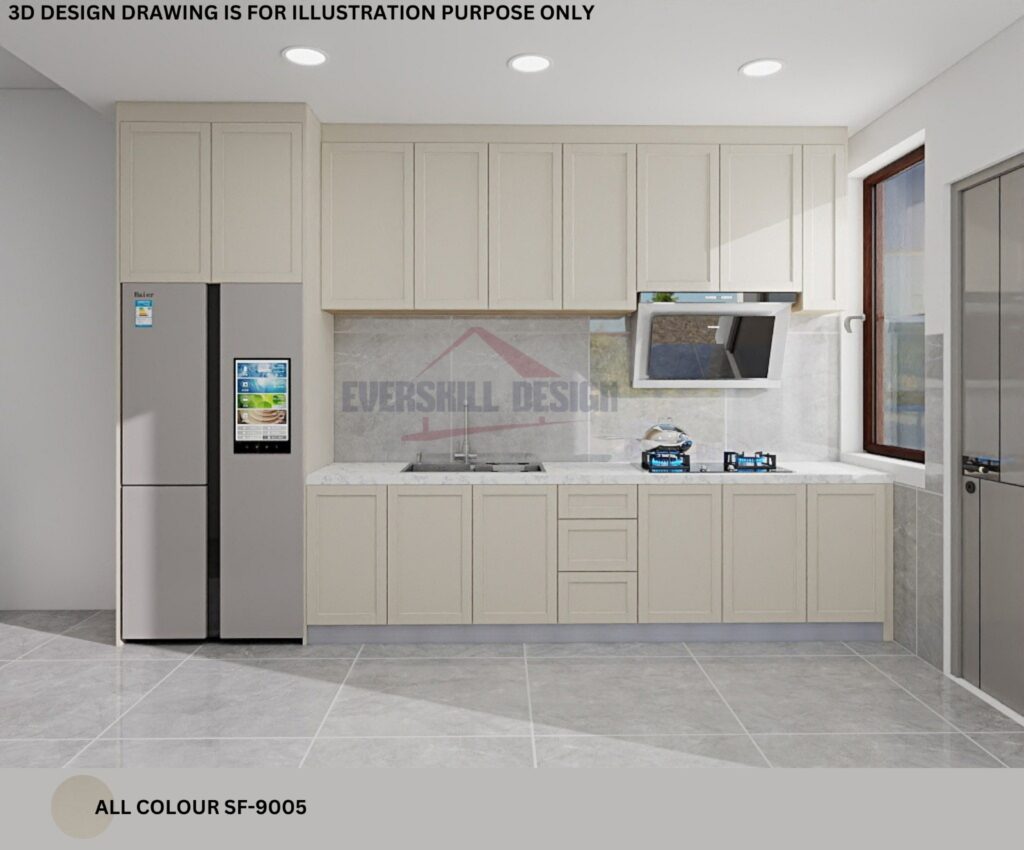
Why Choose aluminium kitchen cabinet: Pros and Cons for Malaysian Homes
Aluminium has risen rapidly as a kitchen cabinet material in Malaysia over the past decade. Sold as the modern, waterproof, termite-free alternative to traditional wooden cabinetry, an aluminium kitchen cabinet sounds like a perfect answer to every Malaysian kitchen problem. But is it really? This guide walks through the genuine advantages, the trade-offs that suppliers do not always mention, the pricing context, and how to decide whether aluminium is right for your home.
WHAT IS AN ALUMINIUM KITCHEN CABINET?
An aluminium kitchen cabinet is structurally identical to a traditional kitchen cabinet, but built entirely from aluminium components rather than wood-based materials. The carcass is constructed from aluminium square tubes, while the panels and doors are aluminium sheets. The countertop is still typically stone (quartz, granite or sintered stone). The result is a cabinet that is lightweight, waterproof, rust-proof and termite-free.
Within the category, there are two main variations:
- Fully aluminium cabinets: every structural component is solid aluminium, offering maximum durability
- Aluminium composite panel (ACP) cabinets: two thin sheets of aluminium bonded to a polymer core, lighter and more affordable but slightly less robust
PROS OF AN ALUMINIUM KITCHEN CABINET
1. Genuinely Waterproof
Aluminium does not absorb water, swell or rot. If your kitchen sink ever leaks, your cabinet survives. This is the single biggest advantage in Malaysian wet kitchens where humidity and water exposure are daily realities.
2. Termite-Proof and Pest-Free
No timber means no termites, no ants, and no wood-boring insects. For homeowners in areas with active termite problems, this can be a decisive factor.
3. Heat-Resistant
Plywood and chipboard char at temperatures around 110 to 150°C. Aluminium withstands far higher temperatures, so accidental hot-pan contact is less likely to leave a permanent mark.
4. Low VOC Emissions
Wooden cabinets use glues and varnishes that can emit formaldehyde and other volatile organic compounds over time. An aluminium kitchen cabinet typically uses minimal adhesives in construction, resulting in lower VOC exposure in your home.
5. Easy Maintenance
A damp cloth handles daily cleaning. No special polishes, no refinishing, no re-staining.
6. Long Lifespan
With reasonable care, aluminium cabinets can outlast wooden equivalents by a significant margin in humid climates.
CONS THAT SUPPLIERS DO NOT ALWAYS MENTION
1. Higher Upfront Cost
An aluminium cabinet typically starts from approximately RM400 to RM600 per foot run, compared to melamine cabinets starting from around RM290 per foot run. Over a full kitchen, this difference adds up.
2. Noise
Metal cabinets produce a more pronounced clanging sound than wood when doors close or pots are placed inside. Soft-close hinges and rubber bumpers mitigate this significantly but do not fully eliminate it. In an open-plan home, the difference is audible.
3. Dent Vulnerability
Aluminium is strong but not indestructible. An accidental kick to a cabinet door can leave a visible dent. Small scratches can be touched up, but larger dents typically require replacement of the affected panel.
4. Heat Conductivity
Aluminium conducts heat rapidly. Cabinets adjacent to ovens or hobs warm up faster than wooden alternatives, which can affect the storage conditions of oils, spices and packaged foods stored inside.
5. Aesthetic Limitations
Aluminium suits modern minimalist designs best. While modern coating techniques can produce wood-grain finishes, the cool, industrial feel of metal does not replicate the warmth of real timber. Classical, country or traditional kitchen styles are harder to achieve convincingly.
IS AN ALUMINIUM KITCHEN RIGHT FOR YOU?
Aluminium is a strong choice if:
- You cook heavily and need a genuinely waterproof wet kitchen
- Your home has had termite or pest issues in the past
- You prefer modern minimalist aesthetics
- You want a low-maintenance kitchen that does not need refinishing
- You are designing a balcony or semi-outdoor kitchen
Consider alternatives if:
- You value the warmth and tactile feel of real wood
- You want a classical, country or shaker-style aesthetic
- You are sensitive to noise, especially in open-plan layouts
- Your budget is constrained
- You value the warmth and tactile feel of real wood