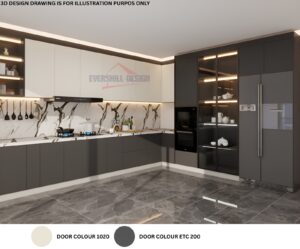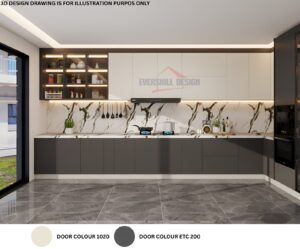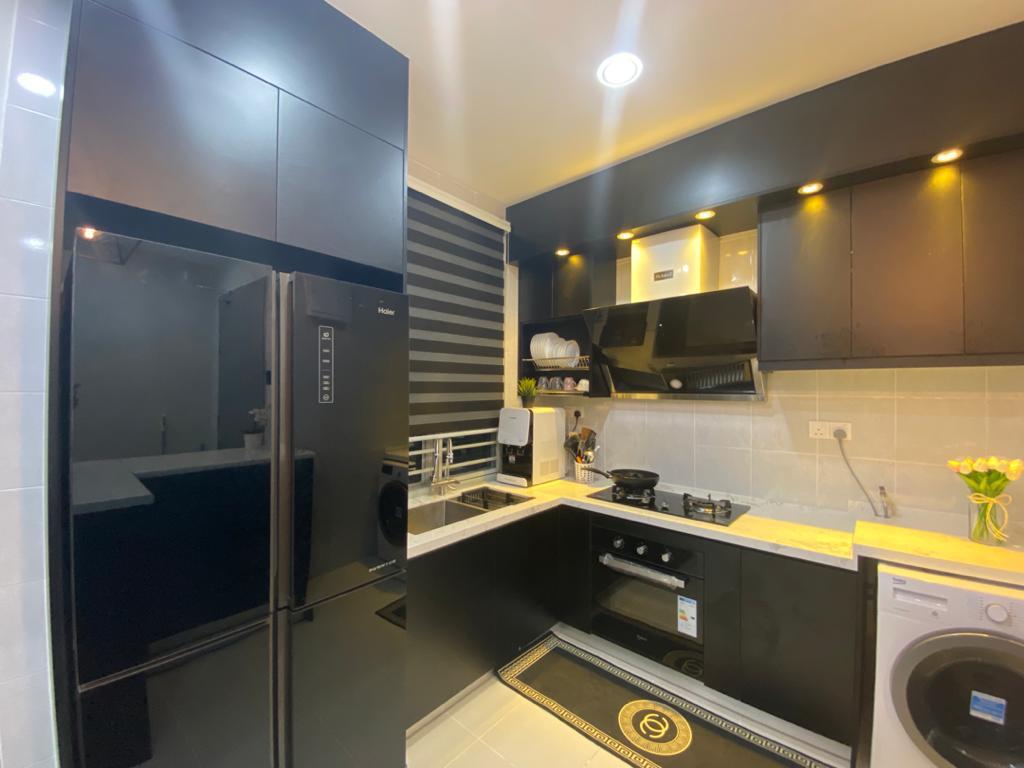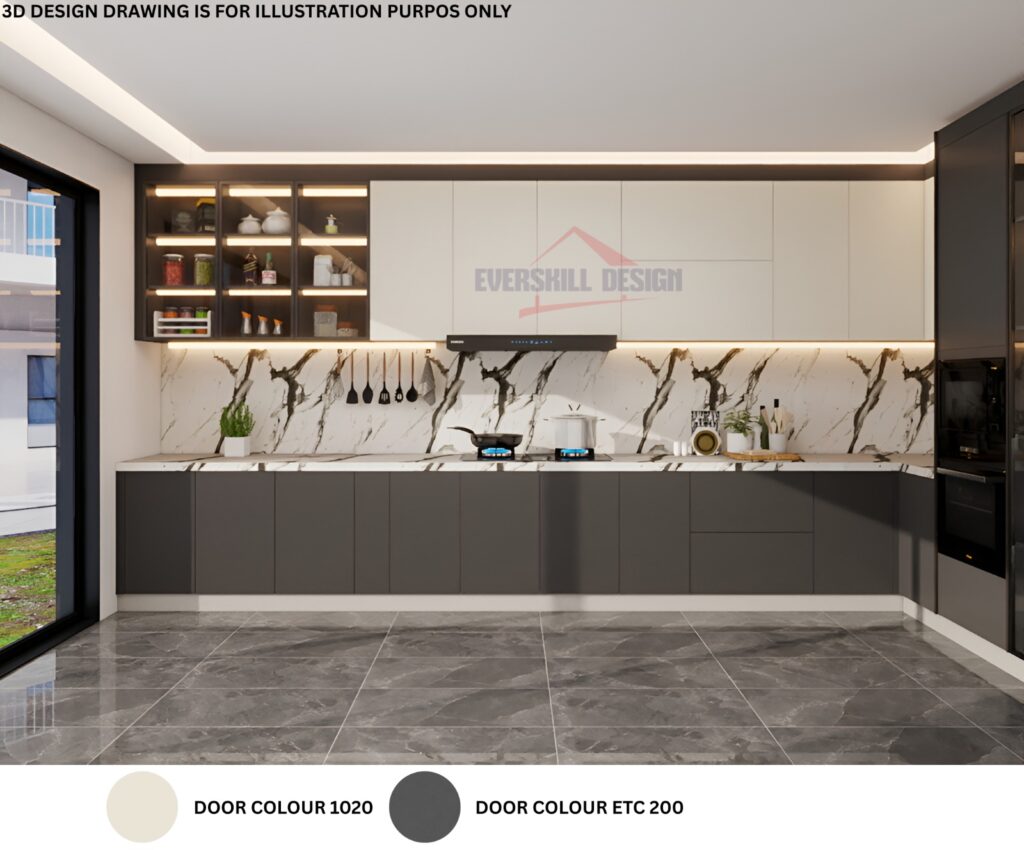
What Is a plywood kitchen cabinet?
When renovating a kitchen in Malaysia, most homeowners obsess over door finishes and tabletop materials. But the most consequential decision is invisible: the carcass material that holds everything together. A plywood kitchen cabinet is the gold standard for Malaysian wet kitchens, and the reason is straightforward engineering. This guide explains what plywood actually is, why it outperforms chipboard in humid climates, the different grades available, the realistic pricing context, and how to choose the right plywood for your kitchen.
WHAT IS PLYWOOD?
Plywood is an engineered wood product made by gluing thin layers of timber veneer together with the grain of each layer running at 90 degrees to the next. This cross-grain construction is what gives plywood its remarkable strength and dimensional stability. Unlike solid wood, which expands and contracts along the grain, plywood resists warping in both directions.
In a plywood kitchen cabinet, the plywood is used as the carcass (the box structure of the cabinet) and often for the doors and panels as well. The visible surfaces are typically finished with laminate, veneer, melamine or spray paint.
WHY PLYWOOD OUTPERFORMS CHIPBOARD IN MALAYSIAN KITCHENS
The most common alternative carcass material is chipboard (also called particle board): compressed wood particles bound with resin. Chipboard is cheaper than plywood and works adequately in dry environments. In Malaysian wet kitchens, the difference shows up over years.
Moisture Resistance
Plywood’s cross-laminated construction resists swelling when exposed to humidity or water splashes. Chipboard, by contrast, absorbs moisture and swells dramatically when wet, often unable to return to its original shape.
Screw Holding Strength
Plywood holds screws tightly, which matters enormously for kitchen cabinets. Hinges, soft-close runners and shelf pins all rely on secure fixings. Chipboard loses its grip on screws much faster, particularly after any moisture exposure, leading to loose doors, sagging drawers and wobbling hinges within a few years.
Long-Term Stability
A plywood kitchen cabinet stays straight, square and structurally sound for decades when properly cared for. Chipboard cabinets typically need replacement within 5 to 10 years in heavy-use Malaysian kitchens.
PLYWOOD GRADES AND FORMALDEHYDE SAFETY
Not all plywood is created equal. Two important distinctions to understand:
Bonding Grade
- MR (Moisture Resistant) plywood: standard grade for dry indoor use
- BWR (Boiling Water Resistant) plywood: higher water resistance, suitable for kitchens and wet areas
- BWP (Boiling Water Proof) or marine plywood: highest water resistance, often used for the most demanding wet kitchen carcasses
Formaldehyde Emission Grade
- E2: standard grade, higher formaldehyde emissions
- E1: lower emissions, widely accepted as safe for residential use
- E0: very low emissions, the safest grade for families with young children or formaldehyde sensitivity
When asking your kitchen supplier about their plywood kitchen cabinet, request specifically which bonding grade and which E-rating they use. Reputable suppliers can answer this without hesitation.
PROS AND CONS OF PLYWOOD KITCHEN CABINETS
Pros
- Strong and stable with excellent screw-holding capacity
- Resistant to warping in humid Malaysian conditions
- Long lifespan typically 15 to 20 years or more with proper care
- Versatile finishing accepts laminate, veneer, melamine, spray paint or wood stain
- Mid-range pricing between cheap chipboard and expensive solid wood
- Repairable individual panels can be replaced if damaged
Cons
- More expensive than chipboard (but worth it in wet kitchens)
- Exposed edges need treatment with edge banding or veneer for moisture protection and aesthetics
- Quality varies significantly between suppliers, so always ask about bonding grade and emission rating
PLYWOOD KITCHEN CABINET PRICING IN MALAYSIA
As a rough guide for Malaysian market pricing:
- Melamine chipboard: from RM220 (wall) / RM280 (base) / RM450 (tall) per foot run
- Solid plywood with laminate finish: from approximately RM330 per foot run
- Aluminium: from RM400 to RM600 per foot run
These figures are indicative only. Actual quotes depend on door style, hardware, accessories and finishes. The plywood premium over chipboard is typically modest, and the long-term durability difference makes it one of the highest-value upgrades in any kitchen renovation.
WHY EVERSKILL USES PLYWOOD WITH COLOUR BOX INTERIORS
At Everskill, our standard carcass is high-grade plywood paired with Colour Box internal finishes. Most budget suppliers finish the inside of plywood cabinets in plain white melamine. The Colour Box approach gives the interior of every cabinet a richer, more designed feel, which matters every time you open a door. It is one of the small differences that adds up over years of daily use.