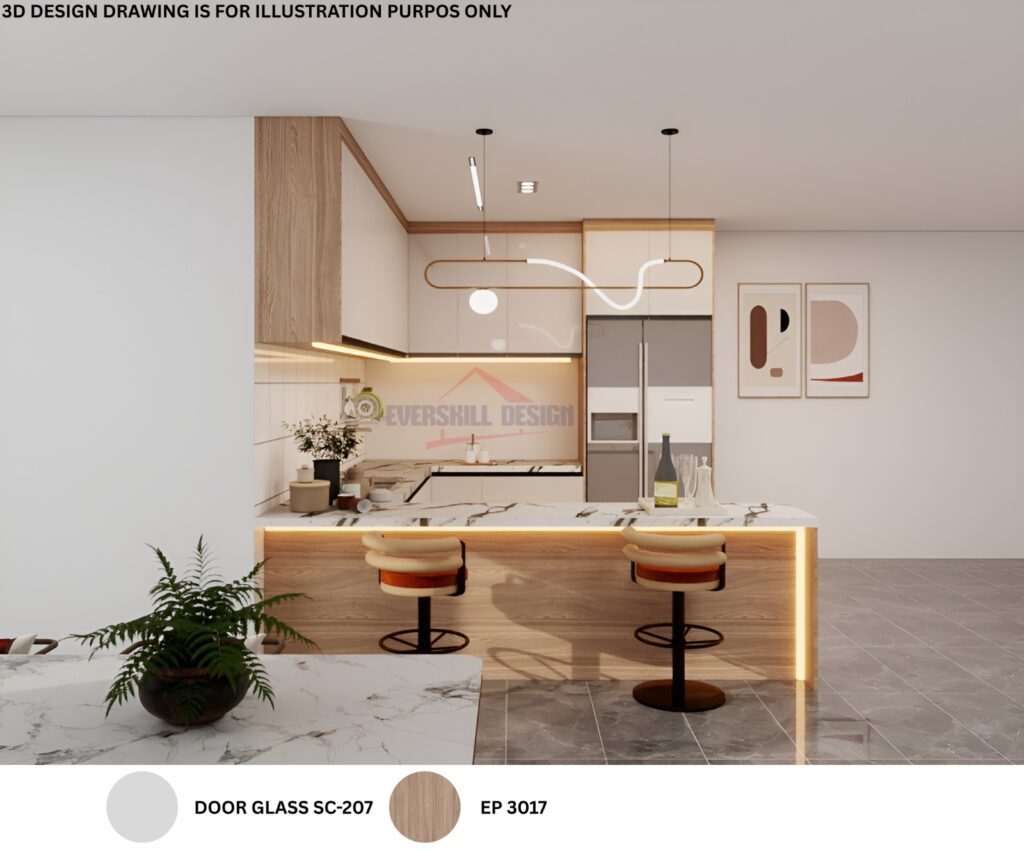
Nyatoh is one of the most prestigious timber choices for Malaysian kitchens. Sought after for its warm grain, classical character and natural strength, a nyatoh kitchen cabinet can elevate your home in ways no melamine finish ever could. But it also comes with trade-offs that every homeowner should understand before committing. This guide covers what nyatoh is, the difference between solid nyatoh and nyatoh plywood, the realistic pros and cons, pricing context, and how to care for the wood once it is in your home.
WHAT IS NYATOH WOOD?
Nyatoh is a native hardwood found across Southeast Asian rainforests, particularly in Malaysia, Indonesia, Brunei and the Philippines. The wood is characterised by tight, straight grain patterns that resemble cherry, with a warm reddish-brown to dark brown tone.
Because of its straight grain, even density and ability to take stains beautifully, nyatoh has been a Malaysian carpentry favourite for decades. It was the standard material for kitchen cabinets long before chipboard and plywood became commonplace, and it remains the wood of choice for homeowners seeking a classical, timeless kitchen aesthetic.
SOLID NYATOH vs NYATOH PLYWOOD: THE IMPORTANT DISTINCTION
Most homeowners do not realise that a nyatoh kitchen cabinet can mean two very different things.
Solid Nyatoh
Cabinets built entirely from solid nyatoh timber strips. Highest grade, highest cost, longest-lasting if properly cared for. Best suited to shaker-door classical kitchens, country-style aesthetics, and homeowners who specifically want the natural feel of timber. Solid nyatoh can be sanded and refinished if the surface ages or gets damaged.
Nyatoh Plywood
Standard plywood with a layer of nyatoh veneer bonded to the surface. Looks similar to solid nyatoh at first glance but costs significantly less. Most commonly used for doors and visible panels, with a different carcass material (often standard plywood or chipboard) inside. Cannot be sanded and refinished the same way solid nyatoh can.
A common middle-ground approach: solid nyatoh kitchen cabinet where appearance and feel matter, paired with quality plywood carcasses for the structure. This balances the warmth of real timber with the durability and stability of engineered board.
PROS OF A NYATOH KITCHEN CABINET
- Timeless aesthetic: the natural grain pattern of nyatoh ages beautifully and never goes out of style
- Genuine wood feel: the weight, texture and warmth of real timber that melamine and acrylic cannot replicate
- Stainable: nyatoh accepts wood stains beautifully, so you can adjust the tone to suit your kitchen palette
- Refinishable: solid nyatoh can be sanded and re-stained when it ages, extending the life of your kitchen significantly
- Strong and dense: holds screws and hinges securely, making for a robust cabinet structure
- Premium positioning: a nyatoh kitchen cabinet adds resale value compared to budget chipboard kitchens
CONS AND THINGS TO BE AWARE OF
- Cost: solid nyatoh sits among the higher-priced material options. Expect roughly 20% premium over nyatoh plywood, and more again over melamine chipboard equivalents
- Moisture sensitivity: real wood expands and contracts with humidity. Without proper sealing and routine care, water marks can appear and varnish can wear off over years of use
- Colour variation: as a natural material, expect some grain and tone variation between pieces. This is part of the wood’s character, not a defect
- Termite vulnerability: all natural timber needs proper anti-termite treatment in Malaysian climates. Reputable suppliers handle this as standard, but it is worth asking
- Longer production time: solid nyatoh fabrication takes longer than engineered board alternatives. Lead times can be three to four weeks from some suppliers
WHAT DOES IT COST?
Pricing for a nyatoh kitchen cabinet depends on whether you choose solid nyatoh, nyatoh plywood, or a combination, and the linear feet of your kitchen. As a rough guide for Malaysian market pricing:
- Melamine chipboard kitchen: from approximately RM290 per foot run (entry-level)
- Nyatoh plywood kitchen: from approximately RM330 per foot run (mid-range)
- Solid nyatoh kitchen: premium pricing, varies significantly by supplier and finish complexity
These are indicative ranges only. Actual pricing depends on door style (shaker, flat, profiled), hardware, internal carcass material and any add-ons such as stone tabletops.
HOW TO CARE FOR YOUR NYATOH KITCHEN
- Wipe spills immediately rather than letting water sit on the surface
- Use mild soap and a damp cloth for daily cleaning, never harsh abrasives
- Re-apply sealant or varnish every few years to maintain moisture resistance
- Schedule periodic anti-termite inspections as you would for any natural timber furniture
- Refinish solid nyatoh doors when surface wear becomes visible, rather than replacing them
IS A NYATOH KITCHEN CABINET RIGHT FOR YOU?
Choose nyatoh kitchen cabinet if you value warmth, character and longevity over the lowest possible price, and if you are committed to occasional maintenance. It suits homeowners building a forever home, those drawn to classical or shaker-style designs, and anyone who appreciates the look and feel of real timber.
Consider alternatives if you cook heavily in a wet kitchen with frequent water exposure, if you prefer a low-maintenance modern minimalist aesthetic, or if your budget is tight. In those cases, aluminium or quality plywood with laminate doors may serve you better.